Apple Scab
Apple scab ranks among the most economically significant fungal diseases affecting fruit trees worldwide. If you’ve noticed unsightly spots on your apple or crabapple leaves and fruit, understanding this plant disease is your first step toward effective management.
Quick Overview: What is Apple Scab?
Apple scab is a common, worldwide fungal disease of apples and ornamental crabapples caused primarily by the fungus Venturia inaequalis. This persistent pathogen attacks leaves, developing fruit, and sometimes flower buds, leading to characteristic spotting, scabbing, and premature leaf and fruit drop.
The disease affects several members of the rose family, including:
- Domestic apple (Malus domestica)
- Ornamental crabapples (Malus spp.)
- Pear (though caused by a related species)
- Hawthorn (Crataegus spp.)
- Mountain ash (Sorbus spp.)
- Cotoneaster spp. and other rosaceous ornamental trees
Apple scab thrives in temperate climates with cool, moist springs. Regions like the upper Midwest, New England, and Minnesota experience particularly severe pressure, as wet weather from April through June creates ideal conditions for disease. In unmanaged orchards with susceptible cultivars, yield losses can reach 50-100%.
Why does apple scab matter? Beyond reducing fruit quality and yield, the disease creates unsightly infected trees in landscapes and causes cumulative stress through repeated defoliation. Over several years, chronically affected trees become more vulnerable to winter injury, borers, and other diseases.
- Bottom line: Effective scab control combines resistant cultivars, thorough sanitation practices, and well-timed fungicide treatments when necessary.
Recognizing apple scab symptoms
Early, accurate visual diagnosis is the first step in managing apple scab. This fasttreeremovalatlanta.com guide will help you catch infections before they spread, giving you the best chance of limiting damage throughout the growing season.
Leaf symptoms
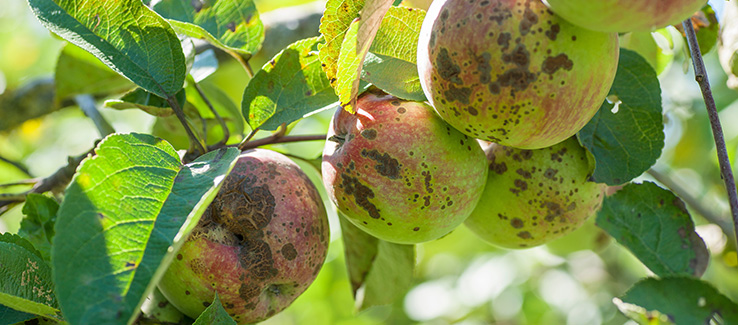
Symptoms apple scab produces on foliage typically appear in early spring on young, expanding leaves:
- First signs show as small, light green or pale olive green spots on leaf surfaces near emerging flower buds
- Spots enlarge into velvety, olive green to velvety brown lesions with feathery, indistinct margins
- As infection progresses, leaf tissue becomes distorted—leaves may curl, pucker, or tear
- Heavily diseased leaves turn yellow and drop prematurely, often by mid-summer
- In severe cases, “sheet scab” may cover entire leaves, causing rapid leaf loss
Fruit symptoms
Infected fruit develops characteristic scab lesions that damage both appearance and fruit quality:
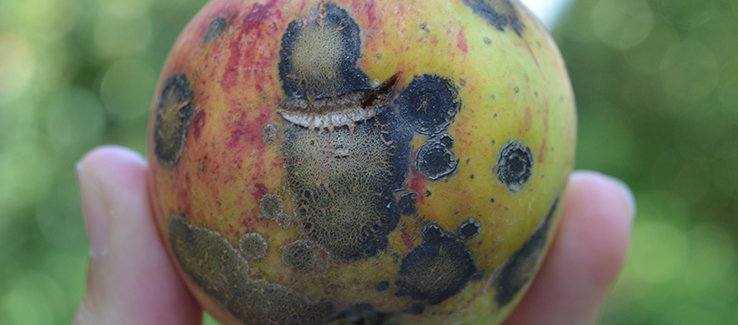
- Small, raised, fuzzy olive green spots appear on the fruit surface soon after petal fall
- As the apple fruit grows, lesions darken to brown-black and become corky and cracked
- Severe scab development distorts fruit shape, stunts growth, and causes fruit drop before harvest
- The fruit tissue beneath lesions becomes tough and inedible
Pinpoint scab and storage scab
A particularly frustrating problem for commercial growers and home orchardists alike:
- Pinpoint scab appears as tiny, dark pinhead-sized specks on stored fruit
- These late-season infections may be invisible at harvest
- Storage scab develops weeks later in cold storage, ruining otherwise healthy-looking fruit
- This underscores why season-long protection matters
Other affected plant parts
In wet years, you may observe additional symptoms:
- Similar olive-brown lesions on sepals and pedicels (which can cause fruit drop)
- Occasional infections on young shoots
- On mountain ash and hawthorn, comparable but smaller, more scattered leaf spots
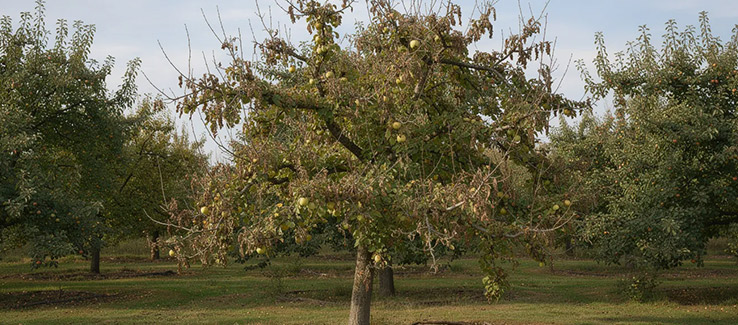
Severe, repeated infections cause noticeable canopy thinning with piles of fallen leaves accumulating beneath infected trees by July or August.
Biology and disease cycle of apple scab
Understanding the life cycle of Venturia inaequalis helps you time control measures effectively. The apple scab fungus follows a predictable pattern tied closely to spring weather conditions.
Overwintering stage
The apple scab fungus overwinters primarily in fallen leaves beneath apple and crabapple trees. During late winter and early spring, fungal fruiting bodies called pseudothecia develop within this leaf litter. These structures contain the sexual spores (ascospores) that launch the first infections each year.
Primary infections
As ascospores mature in spring, they’re released during cool, rainy periods:
- Primary inoculum releases from bud break (green tip stage) through approximately two weeks after petal fall
- Fungal spores travel via wind and splashing rain to emerging leaves and young fruit
- The main release window typically spans 4-6 weeks (often April-June in temperate zones)
- About 90% of the season’s primary infections occur during this critical window
Conditions favoring infection
Infection occurs when moisture remains on leaf tissue for extended periods. The relationship between average temperature and required leaf wetness duration is well-documented:
| Temperature | Hours of wetness needed |
|---|---|
| 39°F (4°C) | 24-28 hours |
| 50°F (10°C) | 14-17 hours |
| 61-75°F (16-24°C) | 6-9 hours |
| Above 78°F (26°C) | Infection unlikely |
Spring rains combined with moderate temperatures create prime conditions for apple scab infection.
Secondary infections
After the initial infection period:
- Visible scab lesions appear 9-17 days following primary infections
- These lesions produce secondary spores (conidia) that spread during subsequent wet periods
- Secondary infections continue through spring and early summer, amplifying disease pressure
- New infections decline as summer temperatures rise consistently above 78°F
Host specificity
The scab fungus shows strain specificity—Venturia inaequalis strains infecting apples and crabapples don’t typically cross-infect mountain ash or pear. Related species, such as Venturia pirina, cause similar diseases on pear.
How apple scab affects tree health and fruit quality
Apple scab rarely kills trees outright, but it can seriously weaken them and devastate crop value over time.
Photosynthesis and tree vigor
Repeated defoliation takes a significant toll:
- Severe infections can reduce photosynthetic capacity significantly
- Premature leaf loss depletes carbohydrate reserves needed for winter survival and spring growth
- Weakened trees become more vulnerable to winter injury, wood borers, and other opportunistic pests
- Chronic stress increases susceptibility to fire blight and other diseases
Yield and quality losses
The economic impact on fruit production is substantial:
| Infection level | Typical outcomes |
|---|---|
| Light (<10% leaf area) | 5-10% yield reduction, minimal quality impact |
| Moderate (10-30%) | Smaller fruit, some premature drop, reduced marketability |
| Severe (>50% defoliation) | 40%+ vigor loss, 80%+ cull rates, tree decline over 3-5 years |
Fresh-market apple fruit with obvious scab lesions is essentially unsaleable. Susceptible varieties like ‘McIntosh’ can see cull rates exceeding 80% in unmanaged orchards.
Long-term consequences
- Commercial orchards may spend $500-1000 per acre annually on spray programs
- Ornamental crabapples become thin, unsightly skeletons when chronically affected
- The landscape value of susceptible ornamental trees drops significantly
- Dead leaf tissue accumulates, perpetuating the disease cycle
Cultural and sanitation practices for apple scab management
Good cultural practices substantially reduce primary inoculum levels and can significantly reduce reliance on fungicide sprays.
Leaf litter management
Since the apple scab fungus overwinters in fallen leaves, removing this material is crucial:
- Rake and remove or compost infected leaves away from trees in autumn
- Alternatively, shred fallen leaves with a mower to accelerate decomposition
- Apply 5% urea spray to leaf litter at leaf fall—this can drastically reduce ascospore production
- The goal is to destroy fruiting bodies before ascospores mature in spring
Canopy management
Proper pruning reduces the duration of leaf wetness after rain:
- Prune during dormancy to open the canopy by 20-30%
- Improved light penetration and airflow help leaves dry faster
- Remove crossing branches and water sprouts that create dense growth
- Better spray coverage results from an open canopy structure
Site selection and planting
When establishing new plantings:
- Choose open, sunny sites with good air circulation
- Ensure well-drained soil to prevent standing water
- Avoid low-lying frost pockets where humidity lingers
- Position trees to capture prevailing winds
Irrigation practices
- Use drip or soaker hoses instead of overhead sprinklers
- If overhead irrigation is unavoidable, water early in the day
- Minimize the duration of leaf wetness during infection periods
Autumn and spring sanitation checklist:
- [ ] Rake or mulch all fallen leaves by late autumn
- [ ] Apply urea to the remaining leaf litter if appropriate
- [ ] Complete dormant pruning before bud development begins
- [ ] Remove any mummified fruit or dead wood
- [ ] Monitor weather and bud break timing in spring
Choosing resistant apple and crabapple varieties
Genetic resistance represents one of the most effective long-term strategies for preventing apple scab. Planting resistant cultivars can reduce or eliminate the need for fungicides.
Understanding resistance types
- Complete resistance: Some cultivars carry genes (like Vf) providing near-immunity through hypersensitive response
- High to moderate resistance: May show minor spotting under extreme disease pressure, but remains commercially acceptable
- Polygenic resistance: Multiple genes contribute to partial resistance that’s often more durable
Even resistant cultivars can occasionally exhibit symptoms during unusually wet seasons, but the damage remains minimal compared to that in susceptible varieties.
Scab-resistant apple cultivars
| Cultivar | Use | Notes |
|---|---|---|
| ‘Liberty’ | Fresh eating | Cold-hardy to zone 4, excellent disease resistance |
| ‘Enterprise’ | Storage/fresh | Scab-free in 95% of trials |
| ‘Freedom’ | Fresh/processing | Good overall disease package |
| ‘Pristine’ | Early harvest | Organic production favorite |
| ‘Williams’ Pride’ | Early ripening | Red fruit, multiple disease resistance |
These modern, disease-resistant cultivars were bred specifically for reduced fungicide use at institutions such as Cornell University and USDA research stations.
Resistant crabapple cultivars for landscapes
For ornamental trees, excellent scab-resistant options include:
- ‘Adirondack’ (Adirondap) – Columnar form, white flowers
- ‘Prairifire’ – Red-purple flowers, persistent red fruit, zones 4-8
- ‘Sugar Tyme’ – White flowers, excellent persistent fruit
- ‘Louisa’ – Weeping form, pink flowers
- ‘Donald Wyman’ – White flowers, outstanding disease resistance
Regional considerations
Some apple cultivars perform better in specific climates:
- Cold-climate regions (Minnesota, New Hampshire): Prioritize zone 4-hardy selections
- Milder areas: Broader cultivar options available
- Consult your local extension service for current, regionally-adapted resistant varieties
Replacing susceptible trees
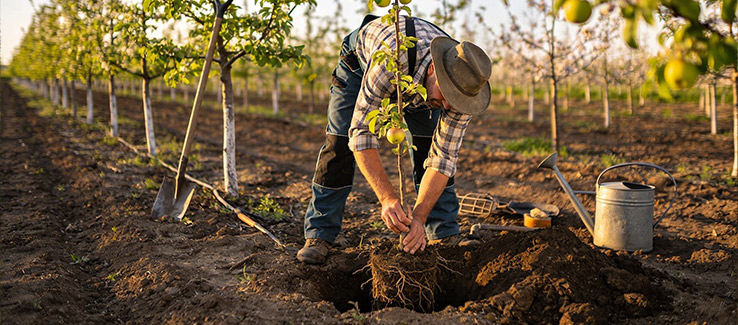
Consider removing chronically infected trees rather than spraying indefinitely. Highly susceptible ornamental crabapples and old apple cultivars may cost more to maintain than replace. Long-term savings in labor, spray costs, and improved appearance justify the investment.
Using fungicides to manage apple scab
Fungicides protect healthy leaf tissue and fruit surface from new infections but cannot cure existing scab lesions. This makes spray timing critical for success.
Timing is everything
The most critical protection period spans:
- Green tip: Ascospores begin releasing; first application if conditions warrant
- Tight cluster: Primary infection pressure building
- Pink bud: Key protective window begins
- Bloom: Protect developing fruit (avoid insecticide mixes to protect pollinators)
- Petal fall: Peak fruit susceptibility
- Cover sprays: Continue 7-14 day intervals during wet weather through early summer
In high-pressure seasons with extended wet periods, cover sprays may continue into early summer to control secondary infections.
Product selection and resistance management
Fungicide resistance is a documented concern in Venturia inaequalis populations worldwide:
- Rotate products with different FRAC codes throughout the season
- Integrate broad-spectrum protectant fungicide options (like mancozeb or captan, where registered) with site-specific materials
- Never rely on a single mode of action repeatedly
- Lime sulfur products offer another protective option for some growers
Label and safety requirements
- Always read and follow pesticide container label directions
- Observe pre-harvest intervals for fruit intended for consumption
- Check the current registration status in your state or country
- Properly dispose of empty pesticide container materials according to label instructions
Reduced-spray approaches
For home plantings combining resistant cultivars with strong sanitation, a minimal program may suffice:
- Focus fungicide sprays on the pink bud through the petal fall window
- Monitor the weather closely during this period
- Consider skipping sprays during dry stretches when leaf wetness is minimal
Integrated strategies and long-term prevention
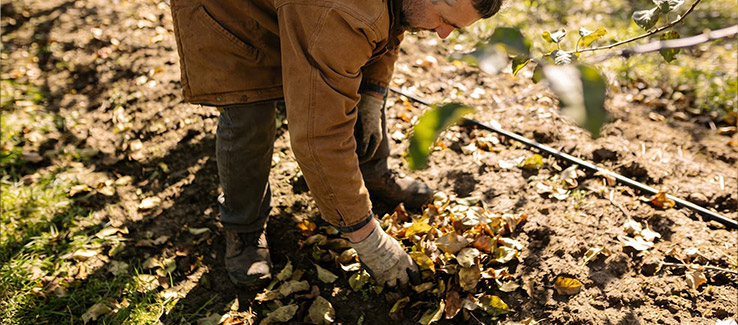
No single tactic completely controls apple scab in high-pressure areas. Managing apple scab effectively requires layering multiple approaches throughout the year.
Seasonal management plan
Late fall:
- Remove or mulch all fallen leaves
- Apply nitrogen to leaf litter to speed decomposition
- Assess this year’s scab severity to plan next season
Winter:
- Prune to open the canopy and improve air circulation
- Remove heavily infected or dead wood
- Order any needed fungicides or equipment
Early spring:
- Monitor bud development and weather forecasts
- Begin fungicide applications at green tip if conditions warrant
- Scout for early leaf spots on susceptible varieties
Growing season:
- Maintain cultural practices and monitor for new lesions
- Adjust spray intervals during prolonged wet weather
- Document infection severity for future planning
Postharvest:
- Evaluate the season’s disease pressure
- Identify problem trees for potential replacement
- Plan sanitation activities before leaf fall
Transitioning to resistant plantings
The most sustainable long-term strategy involves gradually replacing susceptible trees:
- Prioritize removing the most problematic trees first
- Replace with scab-resistant cultivars suited to your climate
- Plan transitions over 5-10 years for established landscapes
Environmental considerations
- Select products and spray timings that minimize risks to beneficial insects
- Avoid or delay insecticide applications during peak bloom when pollinators are active
- Consider organic-approved options like Bacillus subtilis products where appropriate
Apple scab prevention checklist:
- [ ] Plant resistant cultivars for new plantings
- [ ] Remove or destroy fallen leaves each autumn
- [ ] Apply fall urea treatment to remaining leaf litter
- [ ] Prune for open canopy and good air circulation
- [ ] Monitor spring weather and bud development
- [ ] Time fungicide applications to protect against primary infections
- [ ] Scout regularly and adjust management as needed
- [ ] Plan gradual replacement of highly susceptible trees
Effective apple scab management is a season-long commitment, but the reward is healthy, productive trees with minimal fungicide inputs. Start by assessing your current plantings this season, and implement sanitation practices before leaves drop this fall. Your local cooperative extension service can provide regionally specific cultivar recommendations and spray timing guidance tailored to your climate.
(404) 220-9963


About Post Author
